How Sick is Sick Enough?

Photo by Jonathan Borba on Unsplash
I'm Carrie Smolen, a Los Angeles-based therapist specializing in body struggles and eating disorders. In a city like LA (or state like California), where diet culture is everywhere and the line between "taking care of yourself" and obsession can be razor thin, I think it’s especially hard to know when it’s time to seek support. If you've been wondering whether your relationship with food/your body is “normal” or becoming a problem — this one’s for you.
At lunch with a fellow therapist friend from my days working in eating disorder treatment, the phase, “I wish I had the discipline for an eating disorder,” came up. We’ve both worked with clients who have said similar things. Both heard it from acquaintances, especially after learning what we do. And I definitely remember thinking it, if not saying it out loud. We joked about how much of a tell the remark is: if you’re saying something like that, chances are you’ve already got an eating disorder, you just haven’t realized it yet. In a culture that is ever normalizing (and expecting) shrinking bodies, eating disorders are getting easier and easier to miss.
Last week, I was working with a few colleagues to create a training on eating disorder warning signs and assessment for clinicians working with LGBTQ+ youth (an especially at-risk population). After going through diagnostic criteria, we made a point of distinguishing between eating disorders and subclinical disordered eating. For therapists and other healthcare professionals, this distinction is important. I think this is especially true for providers that are not trained in eating disorder treatment, because they need to know when to refer out to someone for whom this work is within their scope of competency. Clinicians do need to be able to distinguish between pink and red flags to know whether or not it is safe to keep working with someone that exhibits disordered eating behaviors. More on that here.
But for everyone else? And especially for those struggling with how they’re relating to food, movement, and/or their bodies? I’m not so sure. In my case, it wasn’t until I read the Diagnostic and Statistical Manual of Mental Disorders: DSM-5 in grad school that I realized that, just a year or so prior, I had met the criteria. I had assumed (even though by then I had already been referred to an outpatient eating disorder therapist) that because I was still eating, and because my body was still in the “normal” range, there was no way that I could actually qualify for a full blown eating disorder diagnosis. Now, after working as a therapist specializing in body struggles and eating disorder treatment, I know how not alone I was in those (often dangerous) assumptions.
According to the National Eating Disorder Association (NEDA):
The universal symptoms in all eating disorders are the manipulation of food intake (dieting, restricting, purging, excessive exercising, etc.) to improve body image, self-esteem, or a negative mood state. Symptoms must interfere with social, interpersonal, occupational, or physical functioning.
Eating disorders, disordered eating, and “normal” dieting exist on a spectrum, and the lines between them can be very blurry. So much in the above statement cannot be assessed without self-report, because things like social and interpersonal functioning are inherently subjective. Nobody can tell someone how lonely or isolated they feel. And even problems with occupational and physical functioning can go unnoticed from an outside perspective, especially in people conditioned to downplay distress and “push through.” As many perfectionists know, projecting a facade of “fine” can easily become second nature. I mean, that’s the entire concept of duck syndrome; we’ve mastered acting like everything is all good while we struggle under the surface.
The distinction between “normal” and '“clinically significant” is especially fuzzy for people who are restricting food and/or exercising excessively, but whose bodies are not “underweight.” For this post, I am mostly going to focus on food restriction and compensatory movement (as opposed to disordered patterns that involve purging and binge eating, though some of the same can be applied certainly). This is because so much of what constitutes a restrictive eating disorder, and is often obviously concerning in very thin individuals, is condoned, celebrated, and even prescribed for people in larger bodies. When someone is bingeing and/or purging, it’s easier to recognize those behaviors as potentially worrisome (though these things are often done in secrecy). When they’re just eating less and/or “healthier” and working out a ton? Things get more confusing.
The DSM-5-TR criteria for anorexia nervosa are:
Restriction of energy intake relative to requirements leading to a significantly low body weight in the context of age, sex, developmental trajectory, and physical health.
Intense fear of gaining weight or becoming fat, even though underweight.
Disturbance in the way in which one’s body weight or shape is experienced, undue influence of body weight or shape on self-evaluation, or denial of the seriousness of the current low body weight.
But, as NEDA notes:
Even if all the DSM-5 criteria for anorexia nervosa are not met, a serious eating disorder can still be present. Atypical anorexia includes those individuals who meet the criteria for anorexia but who are not underweight despite significant weight loss. Research studies have not found a difference in the medical and psychological impacts of anorexia nervosa and atypical anorexia nervosa.
So, to be clear: the severity of a restrictive eating disorder is not based on its making a sufferer medically “underweight.” And even without “significant weight loss” (which… isn’t even defined), an individual can still meet the criteria for an eating disorder diagnosis. According to the DSM-5 TR, a person can be diagnosed with Other Specified Feeding or Eating Disorders (OSFED) if they, “exhibit feeding or eating behaviors that cause clinically significant distress and impairment, but do not meet the full criteria for any of the other disorders.” Atypical anorexia is an example of an OSFED, and there are others including purging disorder (essentially bulimia without binge eating) that specify why a condition does not meet criteria for another disorder. But OSFED does not require particulars beyond, “clinically significant distress and impairment.”
Some examples of OSFED signs and symptoms (from NEDA, many more here):
Becomes preoccupied with weight, shape and appearance leading to restriction/dieting behaviors to promote weight loss
Engages in fad diets, refuses to eat certain foods, and/or often eliminates whole food groups (carbohydrates, fats, etc.) in service of weight loss
Skips meals or takes small portions of food at regular meals
Maintains excessive, rigid exercise regimen – despite weather, fatigue, illness, or injury—due to the need to “burn off ” calories
Drinks excessive amounts of water or non-caloric beverages
Why did I highlight these specific symptoms? Look at them again and consider that this hypothetical person is in a larger body. Would you be concerned about any of it? Or might you be impressed and proud of their “taking their health seriously” or “complying with recommendations from their doctor”? Another symptom from the list is, “denies feeling hungry,” which… I believe is most of the intended outcome when GLP-1s are prescribed for weight loss? So, you can see where this line between strict adherence to a diet and disordered eating (creeping toward a full blown eating disorder) gets clouded. Again, it really comes down to, “clinically significant distress and impairment.”
What does that actually mean? Well, the same list of OSFED symptoms also contains things like:
Fear of eating in public or with others
Withdrawal from usual friends and activities
Frequent checking in the mirror for perceived flaws in appearance
Extreme mood swings
Complaints of constipation, abdominal pain/cramps, cold intolerance, lethargy, acid reflux, and/or excess energy
Dizziness and/or fainting/syncope
Difficulties concentrating
Sleep problems
Abnormal laboratory findings (anemia, low thyroid and hormone levels, low potassium, low blood cell counts, slow heart rate)
Changes in skin/hair/nails
Poor wound healing
Menstrual irregularities
All of that sounds pretty distressing and like it would potentially impair a person’s quality of life. But to a lot of people, and certainly to past-me, those things often just seem like… the price of admission for becoming a societally acceptable version of oneself. Because as a person in a larger body (or a slightly larger than clearly thin one), even just being in pursuit of thinness (without even actually achieving it) can already garner praise and a sense of belonging. Projecting to the world that you are aware of the “problem” of your body is social currency for many. It’s a mindfuck, and a big yikes for me now. It just felt so completely normal back then.
The question that emerges is: who determines, “clinically significant distress and impairment?” How much difficulty or pain makes something a problem that requires intervention? At what point does struggling with one’s relationship to food/movement/their body deserve professional support? How sick is sick enough to get help?
Why does this matter? Because if people suffering believe that they need to be “sick enough” to get help, they simply won’t until things get undeniably bad. And when cultural messaging supports behaviors that cause distress (no pain, no gain, right?), it becomes incredibly hard for those experiencing disordered eating and eating disorders to recognize just how far down the rabbit hole they’ve gone. People develop these behaviors for all kinds of reasons, but very often it is a way for individuals to deal with the challenges of life. We are taught that our bodies are easier to control than our circumstances, so it is no wonder that so many of us turn to restriction when we are feeling otherwise helpless. Check out my recent post on that here.
All of this is why “parts work” is a major component of the way I treat clients struggling with disordered eating and eating disorders. Parts work stems from the recognition that we all contain multiple different facets and perspectives within one “self,” and sometimes those components are in conflict. For people struggling with restriction, that often means that a part of them is excited by and proud of their “will power,” while another part (even if very small and quiet) is concerned that things have gotten out of hand.
If that sounds at all familiar to you, I encourage you to take a deep breath and hear me when I say: all of this makes sense. It is incredibly hard to create a peaceful relationship with food and your body in a culture that does not want that for you. You do not have to do anything with that resonance right now. If you feel able, I do encourage you to share how you’re feeling with someone that you think might be able to hold the complexity of it all. A friend, a family member, a therapist. You can consult with me without having to commit to a full session. And if you’re not ready for that, that’s okay too. Noticing a feeling does not mean that you have to do anything about that feeling, certainly not right away.
If this gives you that sensation of eerie familiarity, but for someone else in your life other than yourself, I see you too. I highly recommend that you find a way to gently say something to that person. I am open to your messaging me if you’re looking for advice on exactly how to broach that subject with a loved one you’re worried about. In addition to the therapist that referred me to an eating disorder specialist, the other biggest nudge I got came in the form of a good friend who very softly expressed concern about how “enthusiastic” I had become about the latest “challenge” at my gym. I want to be clear that these can be very hard conversations to have, especially because of what I mentioned about how restrictive eating disorders work: a big part of a person who is struggling does NOT believe that they are doing anything that could be even potentially harmful. Whatever you might choose to say will be very case by case (again, why I’m down to spitball with you about it if you would like), but broadly I recommend something along the lines of:
I can see how much work you’re putting into your body right now, and if that’s feeling good for you, I support it. I just want to be honest about my own anxiety that comes up when I hear you talk about it all, because it seems like it must be taking up a lot of your energy. Again, if you’re feeling good about it, I’m here for it. I just wanted to say something in case you ever want to talk about any parts of it that feel hard.
I also just want to say that you, especially (but certainly not exclusively) if you’ve done some work on your own relationship with your body, do not have to indulge people in diet or body talk that feels harmful to you. You can opt out of those conversations by setting a boundary (“I don’t really like to talk about that sort of thing”) or just changing the subject. Not wanting to indulge someone’s over-emphasizing their diet/body/whatever does not make you a killjoy. I also think it’s pretty great to model the ability to have fun and connective conversations that don’t involve body shaming or “wellness” (weight loss) tips. In certain circles, I get that that could sound far-fetched. For your sake, I hope you find that statement surprising. If not… let’s be a part of continuing to move the needle away from that unhelpful (and frankly, not very interesting) nonsense.
Returning to the title of this post, I hope that after reading this you’ve got a better sense that there is no such thing as “sick enough” to get help with your relationship with your body. There is no bar to clear. If you’re feeling like something just isn’t quite right and you’re not sure what to do about it, reach out for support. Depending on the kind of collaboration you need, there are all kinds of therapists, dietitians, coaches, medical professionals, and groups that have your back. You’re not the only one dealing with this stuff, and you certainly don’t have to hold it all by yourself.
If you're finding it hard to sort out where the line is between taking care of yourself and being too consumed by your wellness and appearance — that's worth exploring with someone. I work with clients across California on their relationships with food, their bodies, and the complicated feelings that come with both. Book a free consultation.
Duck Syndrome is a Substack for overwhelmed perfectionists and anxious overthinkers— people who look like they have it all together while paddling frantically under the surface. If this resonated, there's plenty more where it came from.
Read the full archive and join the flock on Substack →
VIRTUAL THERAPIST • LOS ANGELES
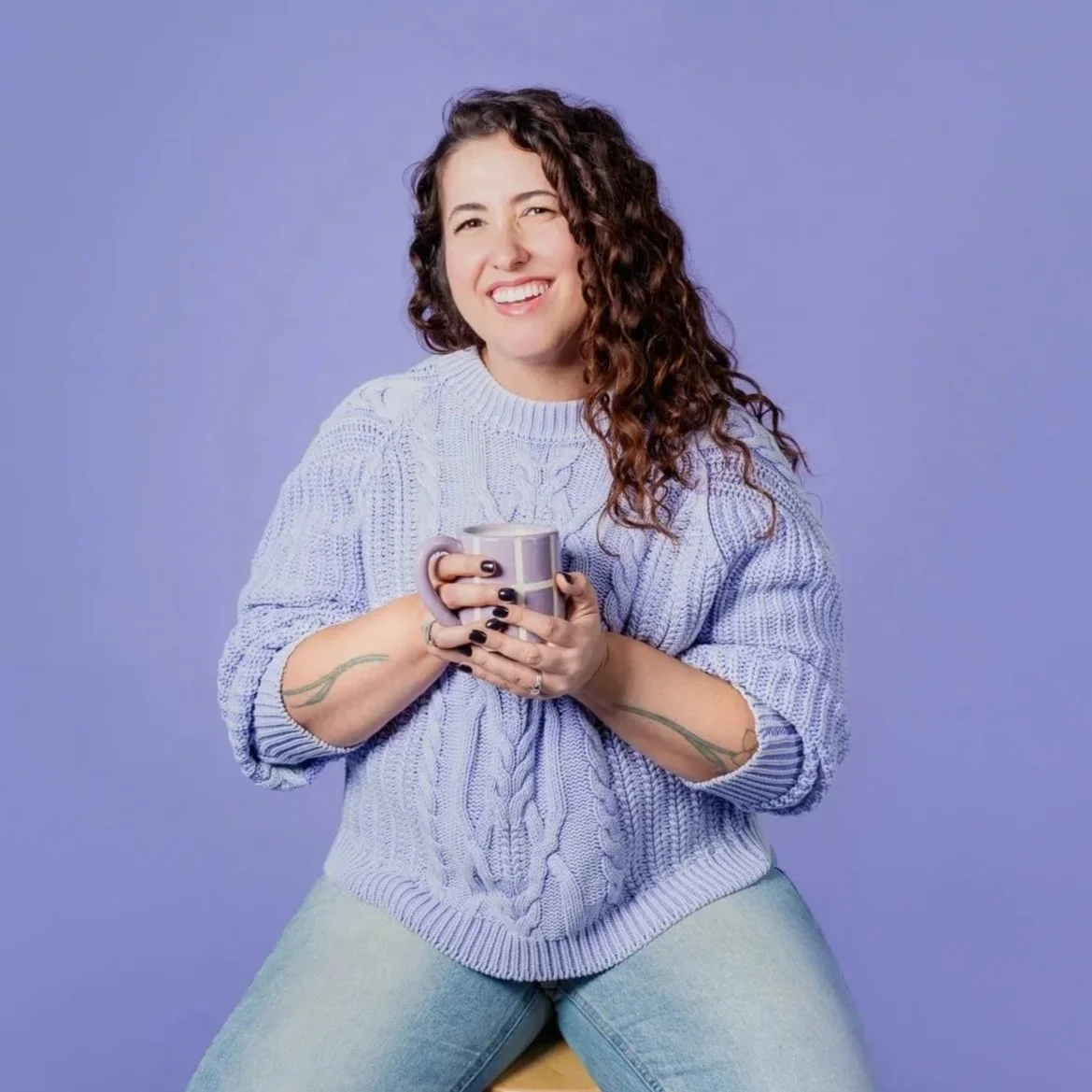
Hi, I’m Carrie (she/her).
A therapist for thoughtful, overwhelmed humans trying to be good people in a complicated world.
As a therapist for folks all over California, most of my work centers on helping clients with issues related to perfectionism and body struggles, including eating disorders.
I love to come along for the ride as people get clearer on who they are, what they need, and how to move through life with more ease, self-trust, and permission to be unapologetically imperfect.