How Not Asking for Help Actually Makes You Kind of an Asshole
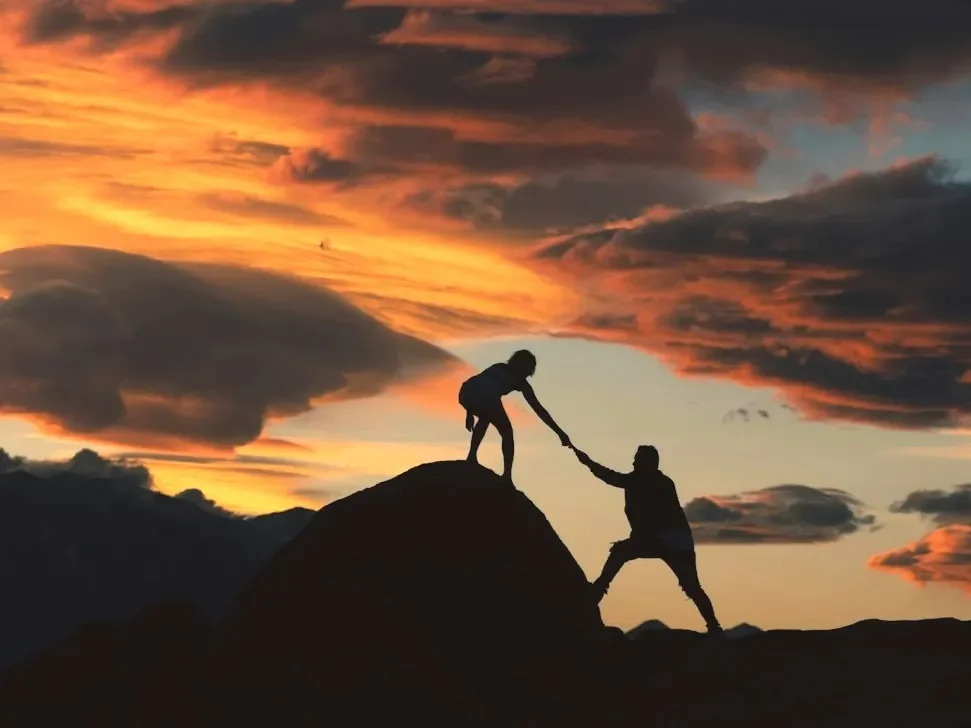
I'm Carrie Smolen, a Los Angeles-based therapist specializing in perfectionism and anxiety — and I'll be the first to admit I'm terrible at asking for help. In my California therapy practice, I work with a lot of people who pride themselves on their independence, and who have slowly, without realizing it, created a dynamic where needing anything from anyone feels impossible. If that sounds familiar, this one might sting a little. In the best way.
I am terrible at asking for help. I’m bad at accepting help. In a lot of situations, I’m not even particularly good at admitting that I could probably theoretically use help.
One of my main flavors of perfectionism is the sensation that I need to do everything on my own. My independence has been reinforced throughout my life, leading me to develop a sense of self that is centered around my own capabilities and resources. In my mind, if I can do something on my own, that means I should do that thing on my own. Even when the responsibility is shared with another person or group, my brain tries to convince me that the division of labor has to skew toward putting more on my shoulders. I volunteer for things I don’t really want to do all the time, just because I want to be considered a team player. I often feel like a little lump of cold butter trying to be spread over too much toast.
In my therapy practice, I work with a lot of clients who feel similarly. They want to think of themselves as people that add value to their families, friend groups, and networks; they do not want to be people anyone might perceive as a burden. They struggle mightily with the idea of causing anyone to feel put upon. In theory, this attribute seems pretty innocuous and even generous; there’s an inherent thoughtfulness about how they impact others. But what starts off as not wanting to ask too much of those around them can quickly lead to unintended consequences. Much of the work I do with clients like these involves creating awareness around all of the things that contribute to this fear, and slowly increasing their capacities to try trusting confidants to support them.
I’ve been thinking about a few different recent instances of close friends asking me to help them with favors. For their privacy, I’m not going to specify what these things were, but they were all medium-sized asks. Not super inconvenient for me, but also the sort of thing where I did have to go out of my way or rearrange my schedule slightly. In each of these circumstances, my friends were profusely apologetic and excessively effusive. They offered me compensatory treats and reconfirmed more than once that it was really not too much trouble for me. Of course I appreciate the consideration, and not taking my time or energy for granted. And don’t get me wrong, I’d never turn down being taken to a thank you lunch. At the same time, it’s made me reflect quite a bit on how we got to a place where we all feel so uncomfortable leaning on one another.
I think somewhere along the way, without realizing it, my inadvertent tendency to resist asking for help has contributed to a culture where this particular type of avoidance has become a norm in my circles. By not asking for support when I could use it, I’ve also been accidentally projecting the message that I am not open to receiving such requests.
I don’t know about you, but that idea makes me feel like a little bit of an asshole. When we don’t ask for help, we deprive the people that care about us the opportunity to show up for us. We forget that it actually feels really good to help people we love when we are able.
I know that much of the reluctance around asking for help is informed by broader (especially white, higher SES, individualist) cultural ideas about what it means to mature. At some point over the past decade or so, my friends and I implicitly agreed to frame no longer inconveniencing one another as some sort of right of passage. It became “more adult” not to ask one another for things like rides to and from the airport or help moving. I very much acknowledge that such a stance is facilitated by economic privilege, but these things became somewhat out of the question once it was understood that generally speaking we could afford things like ride shares or overnight parking or moving companies.
I think we also probably overestimate how under-resourced we all are, because it’s so culturally condoned to emphasize being busy. It does make it harder to ask for help when we think we’re likely to get a no, because rejection in any form feels scary and can hurt, even if it’s on a small scale and accompanied by apologies and explantations. Again, I would never advocate being rude or careless with others’ time and energy, but I do think that we talk ourselves out of making the reach because we preemptively convince ourselves that whatever we need is “too much” or shouldn’t be anyone else’s problem.
Lately, especially in response to the current political climate, I’ve been consuming and engaging in more and more discourse about the importance of building community. People are talking about valuing looking out for each other and showing up for one another in times of need. In parenting circles, we talk about building the “village” we’ve all been told it takes to raise children. I’m seeing people leaning into the idea of more spontaneous and unfussy “entertaining” where you don’t worry about whether your place is “presentable” or your menu is “impressive” enough for company. There’s an intimacy to exposing your mess to others, just as there’s connection that forms through vulnerability.
When we invite people into our space (whether literally or just emotionally), allowing for it to be imperfect, we signal to them that we trust them with our fallibility. We communicate that we feel close enough to be safe exposing the parts of ourselves that we don’t show to strangers and acquaintances. I believe that the same goes for when we ask each other for help. When someone asks me for help, especially when it’s about something that is important to them or would make them feel happier/more rested/less overwhelmed/generally better… it feels SO good. It affirms their comfort with me, and reinforces that they feel at ease with me in the way that I want those close to me to feel.
So, that is all one reason that not asking for help makes me feel like an asshole, but: surprise! I actually have another. When I don’t ask for help… I end up feeling like I have too many balls in the air. And despite being from San Francisco, and having “circus arts” as part of my elementary school P.E. curriculum… I truly cannot juggle. When I have that feeling for too long, when it feels like I’m a shark that can’t stop swimming because I have too many things that need my attention, I burn out. And when I burn out, I don’t have the capacity to show up in the way I’d like to: as my most grounded, gracious, curious self. All of which is just a long-winded way of saying that it’s harder for me not to be an asshole.
With all of that said, I want to publicly declare my intention to act in a way that aligns more with my values. I want to project to my community that I want to create an atmosphere that normalizes asking for and accepting help from one another. I want to let go of the idea that my worth derives from how much I can do for others, and how little I need from anyone else. I want to take care of myself so that I can feel resourced enough to be the best me for the people I love. Of course, I recognize that a lot of this is easier said that done and that it takes work to get to a safer place around putting all of this into action. Still, I want to intentionally grow toward this kind of interdependence. Who’s with me?
If the idea of asking for help — or even admitting you need it — feels genuinely hard, that's something worth unpacking. I work with perfectionists and people-pleasers across California who are learning to let others in. Book a free consultation.
Duck Syndrome is a Substack for overwhelmed perfectionists and anxious overthinkers— people who look like they have it all together while paddling frantically under the surface. If this resonated, there's plenty more where it came from.
Read the full archive and join the flock on Substack →

VIRTUAL THERAPIST • LOS ANGELES
Hi, I’m Carrie (she/her).
A therapist for thoughtful, overwhelmed humans trying to be good people in a complicated world.
As a therapist for folks all over California, most of my work centers on helping clients with issues related to perfectionism and body struggles, including eating disorders.
I love to come along for the ride as people get clearer on who they are, what they need, and how to move through life with more ease, self-trust, and permission to be unapologetically imperfect.