10 Things I (a Therapist) am Doing to Let Go of Perfectionism
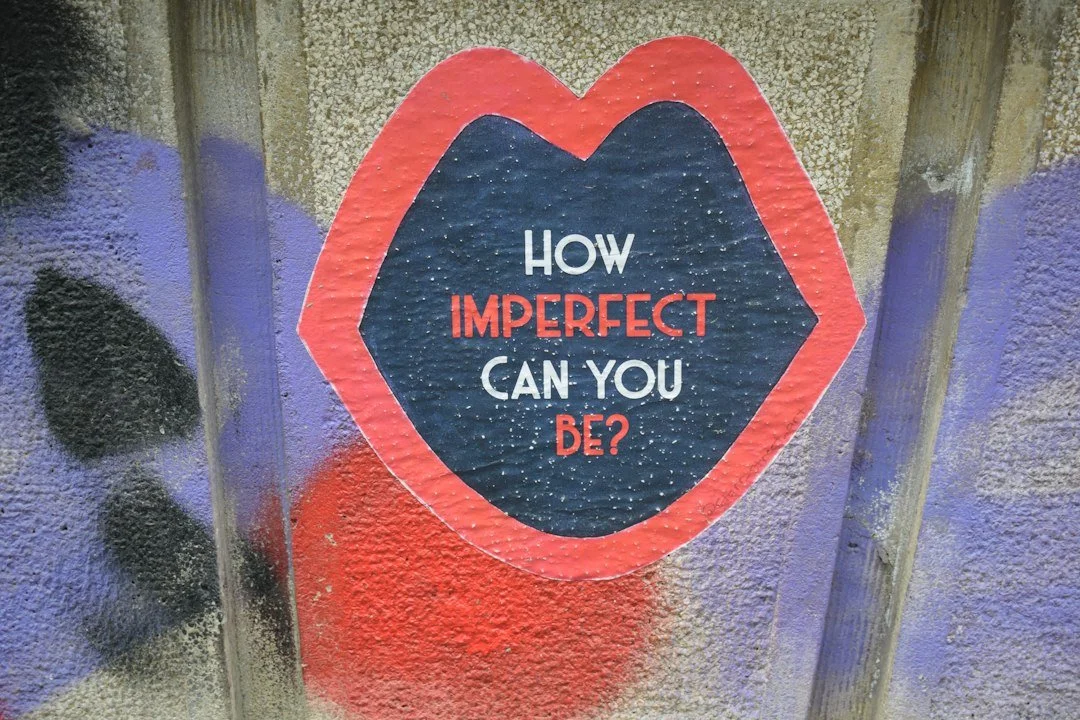
Photo by Marija Zaric on Unsplash
I'm Carrie Smolen, a northeast Los Angeles therapist specializing in anxiety and perfectionism. One of the focuses of my practice is therapy for perfectionists, first and foremost because I relate to the sensation of striving to be perfect in a culture that tells us we have to do everything right in order to be worthy. If you've been curious about how to challenge your own perfectionist tendencies, here are ten ways that I’m trying to let go of mine.
After six years of working with clients, I passed my clinical exam and became a Licensed Marriage and Family Therapist. Compared to many of my grad school classmates and coworkers along the way, I took the long road in completing my 3000 supervised hours. Looking at the situation as objectively as possible, it makes sense: I took some time off to make a full-on human, and had the privilege to get to work part time during his first years on Earth. Still, it was hard to watch colleague after colleague hit this major milestone and feel left in the dust. Despite knowing that everyone’s timeline looks different, and we all take different paths to wherever we’re going, it feels SO good to finally be here myself. I don’t think the full sense of relief has even hit me yet. I am beyond excited to get my private practice up and running, and set up all my clients who are joining me there to continue the incredible work that we’re doing. And of course, I’m very much looking forward to consulting with new clients too.
So when I was thinking about what to write during this especially anxious week leading up to the test, I thought about how loud my perfectionism has been throughout this process. Oof, it’s been intense. I’ve been feeling so much shame about being “behind,” and that tends to be when I’m at my most perfectionistic. I’ve had to call upon the tools I’ve been working on utilizing as a recovering perfectionist, and I thought that since they were top of mind, why not share them? After all, I do specialize in working with perfectionists.
10 Things I’m Doing to Let Go of Perfectionism
Note: I intentionally began all of these with “-ing” verbs, because these are things that I am actively doing and very much works in progress. I’m no self-help guru, just a therapist with a lot of training (and a license!) in how to help people experiment to find things that work for them, even if it may take quite a lot of practice. This is my own version of that.
1) Comparing my perfectionistic thoughts to my true values
I don’t believe in the concept of perfect, and I don’t feel that pursuing perfection is a worthwhile endeavor. I do believe that perfectionism is a direct result of existing in a culture that overvalues productivity, determines worth based on adherence to oppressive power structures, and leaves absolutely no room for humans to have desires and needs that are unrelated to their output. So when I recognize that I’m feeling the strong urge to be perfect, I try to remind myself of who wants me to think I have to be perfect. It helps me snap out of it when I realize that rejecting perfection is a pretty good way to say fuck you to the system.
2) Decoding the message the feeling is trying to send me
I resonate quite a bit with a lot of the language I’ve been seeing (especially here on Substack) around reframing emotions as messages, rather than as things to fix. I’m trying to be very intentional about checking in with myself when I’m feeling the need to do something perfectly, to try to get a better sense of what’s underneath that sensation. What emotions are coming up? What’s going on in my body? What else is happening in my context that could be informing this feeling?
3) Getting curious about why I’m trying to do something perfectly
Similarly, I’m trying to better understand what is happening in me when I feel like I need to do something perfectly. What am I afraid of? What am I trying to control? What do I think I will be able to ensure or prevent? I try to remember that my perfectionism has been something I’ve turned to in an effort to adapt to my circumstances. It has given me a sense of safety, so by exploring why I’m feeling the desire to be perfect, I’m also getting a better sense of what my needs are in a given situation. For many perfectionists, especially those of us with people pleasing tendencies, identifying our own needs is an underdeveloped muscle. This is one of the ways I work on strengthening mine.
4) Giving myself a reality check
I’m also working on getting really honest with myself about my expectations and standards. Do I need to be getting a 100% on this thing? Does whatever this is require A+ effort? Am I trying to get extra credit for something that is fully pass/fail (or, more likely, doesn’t even have any sort of grading system at all)? For me, the answers are almost always: no, probably not, and yes definitely, you silly-head.
5) Reminding myself what I’m actually working on
By now, I’ve recognized that perfectionism isn’t really serving me. It’s added stress and anxiety, and in an effort to live a more peaceful existence, I really don’t want it to overtake my focus and energy. So when it pops up, I’m trying to be really cognizant of considering that what I am actually trying to do is get increasingly comfortable with NOT doing things perfectly. For me, I’m trying to reframe things such that half-assing something that can be half-assed is a bigger accomplishment than going balls to the wall with something that really didn’t need that from me.
6) Thanking my perfectionism for the ways in which it’s served me
This one is basically just reappropriating Marie Kondo’s KonMari method. I’m “decluttering” my perfectionistic tendencies. Telling them that they no longer spark joy, thanking them for all the things they’ve done for me, and then trying to let them go. I’m leaning into gratitude here, because I think it’s important for me to recognize the ways in which my perfectionism has really served me. I have achieved a lot because of how hard I’ve pushed myself. Being a perfectionist has also given me a sense of safety when I have needed it, and has made me a generally more thoughtful and reliable person. Even though it’s time to give it the old “it’s not you, it’s me” speech, I can still appreciate everything I’ve gained from our time together.
7) Rejecting the notion of “guilty pleasures”
For real though, why are we still using this kind of language? Don’t we have enough going on in the world that we can stop shaming ourselves for the things we like? I’m embracing the things that bring me joy, pleasure, and relaxation unabashedly and enthusiastically. Sure, maybe some of the things I like don’t match my “perfect” vision for how I “should” be… but at the end of the day, I like what I like and I’m not going to feel bad about any of it.
8) Remembering that I am not responsible for others’ feelings
Often my perfectionism is a manifestation of my trying to be “good,” so that others will like me and want me around. When I recognize that I don’t control how others feel (even about me), I get to let go of that responsibility and focus just on being the best (most authentically values-aligned) version of myself. Of course I do think about how I impact those around me in an empathetic way, but I’m trying to concern myself less with needing to earn my keep.
9) Noticing when my attention is shifting to body perfectionism
When I’m feeling overwhelmed and like I want something to control, it’s very easy for my perfectionist focus to shift to my body. I’m trying to strengthen my ability to realize when that’s happening, because it helps me tend to myself in a way that often addresses what I’m actually feeling, not just want I think I need. If this one resonates for you, please check out this recent post or this part of my website.
10) Confiding in my accountability people
This one is pretty self-explanatory: it really helps me to talk to people I trust about what I’m experiencing. I’m a verbal processor, and talking about whatever I have going on helps me figure out how I actually feel. I also highly value interdependence, and I want to create an environment in which those around me and I feel like we can be open about our growth edges. Because of shame, so many of us feel like we have to be kind of secretive about the things we’re trying to do differently and I say: fuck that, let’s hold each other accountable and help each other feel seen. Friends and family can be great for this, but… you know… so can a therapist :)
If your perfectionism is getting in the way of enjoying your accomplishments — or just your life in general — that's exactly the kind of thing I work on with clients all over California. Book a free consultation and let's talk about how to be a little easier on yourself.
Duck Syndrome is a Substack for overwhelmed perfectionists and anxious overthinkers— people who look like they have it all together while paddling frantically under the surface. If this resonated, there's plenty more where it came from.
Read the full archive and join the flock on Substack →

VIRTUAL THERAPIST • LOS ANGELES
Hi, I’m Carrie (she/her).
A therapist for thoughtful, overwhelmed humans trying to be good people in a complicated world.
As a therapist for folks all over California, most of my work centers on helping clients with issues related to perfectionism and body struggles, including eating disorders.
I love to come along for the ride as people get clearer on who they are, what they need, and how to move through life with more ease, self-trust, and permission to be unapologetically imperfect.